Most people work out whether they can afford the mortgage. Very few work out whether they can afford the house.
Taps wear out, waterproofing fails, gutters rust and bathrooms date. None of it is a surprise, but it always arrives like one. The simplest way to plan for it is the 1% maintenance rule.
What is the 1% rule?
Spend or save about 1% of your property's value every year on maintenance, repairs and renovations.
Property value
1% a year
A month
A week
$1,000,000
$10,000
$833
$192
$2,000,000
$20,000
$1,667
$385
$5,000,000
$50,000
$4,167
$962
It is a savings habit, not a bill. Some years you spend a few hundred dollars on a tap and a hot water service. Other years the roof or the bathroom is due and you spend $40,000. The 1% smooths that out, so the big year does not land on the credit card.
It works on a two-bedroom unit and it works on a $5 million home. The dollar figure changes. The habit does not.
Work out your own figure
What should you be putting aside?
$
What kind of property?
What condition is it in?
A planning guide only. Every property is different, and what yours needs comes from looking at it.
It is not just us saying it
In June 2026 the head of Master Plumbers NSW told Money Magazine that homeowners should put aside around 1% to 3% of their property's value each year for maintenance and repairs.
Landlord insurer Terri Scheer suggests older or run-down properties may need closer to 2%.
A Finder survey found almost one in three Australians are putting off home repairs because of the cost of living, and plumbing is the repair most often put off.
That last one is what we see every week. Plenty of people stretch to the biggest mortgage the bank will give them, then cannot cover a simple repair. Small problems get left, and problems that get left get expensive.
What the 1% should cover
Not just leaking taps. Over the years it pays for:
Upkeep: gutters cleaned, drains checked, hot water serviced, silicone and grout redone.
Prevention: resealing a shower before it leaks, gutter guard, clearing stormwater, replacing an old hot water system before it lets go.
Replacement and renovation: bathrooms, kitchens, roofs, flooring, paint, decks and outdoor areas.
The block itself: trees, retaining walls, paths, garden and drainage.
How long things last
Part of the house
Typical life
Carpet
7 to 15 years
Kitchen
10 to 20 years
Bathroom
10 to 20 years
Hot water system
About 10 to 15 years
Interior paint
5 to 7 years
Exterior paint
5 to 10 years, less near the coast
Decks, pergolas and outdoor structures
Refurbish every 10 to 15 years
Colorbond gutters and downpipes
20 to 30 years, longer with gutter guard
Concrete or terracotta tile roof
30 to 50 years, terracotta longer with care
Colorbond roof
40 to 70 years
A quick test: walk into a bathroom built around 2000. Does it still look clean, work properly and feel like something you would pay for today? If not, it is due, whether it leaks yet or not.
Buying a run-down house: the 40% trap
This is the one we see most, and it is expensive. A buyer finds a tired house for less than the tidy one down the street and thinks they have got a deal. Then the work starts: bathrooms, roof, gutters, drainage, waterproofing, paint, flooring.
In our experience, bringing a run-down Sydney house up to today's standard can cost as much as 40% of what was paid for it.
Run-down house
Better house
Price paid
$1,600,000
$2,080,000
Work to bring it up to standard
Up to $640,000
Small
All up
Up to $2,240,000
About $2,080,000
Living in it
Months of trades and dust
Move in
The frustrating part is that the buyer could often have bought the better house for about 30% more, but stretched to the cheaper one and then cannot afford the work. If you are buying older or neglected, have the plumbing, drainage, roof and waterproofing looked at before you exchange, and budget closer to 3% a year until the place is brought up to scratch.
A little leak in Collaroy Plateau
A homeowner called us about a leaking shower. The plan was simple: lift the shower base and put in a new one.
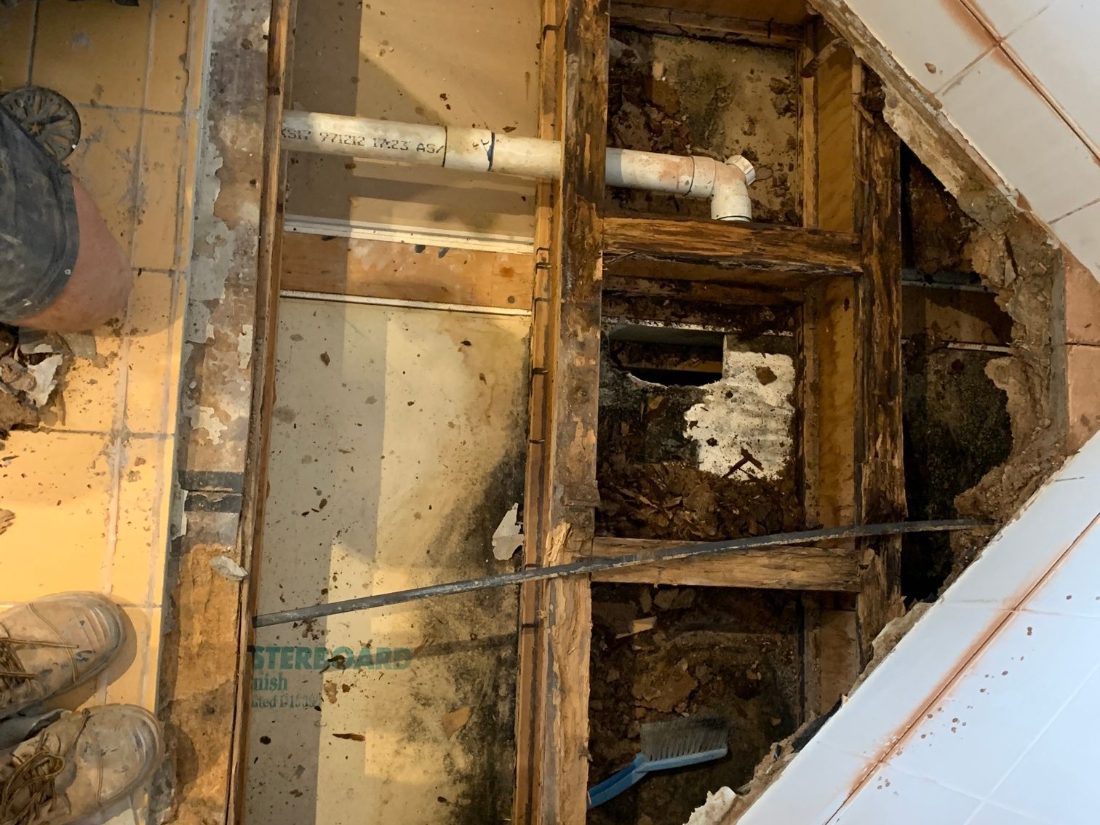
When our plumber cut out the tiles, there was nothing left under the shower. The floor sheeting had rotted out completely and the beams under it had rotted too. The only thing holding the floor together was the tile bed. The rest of the bathroom floor was cracking. We stopped, made it safe and brought in a carpenter.
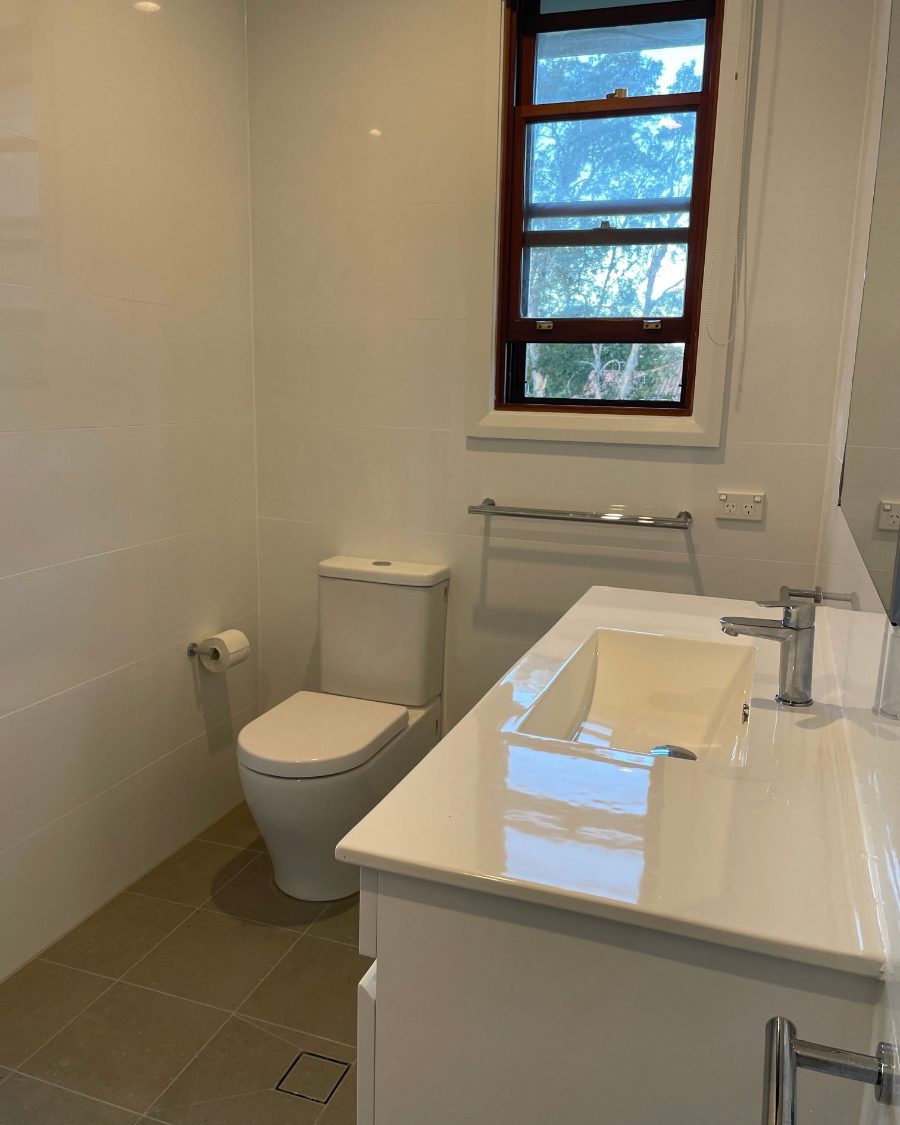
What was under the tiles.The same bathroom, finished.
What started as a shower base became a full bathroom rebuild: new floor, waterproofing, tiles, fixtures and fit-out. Our part alone came to about $34,000, before the carpenter's bill. Over the following months the same house also needed water stopped coming through the sandstone into the garage below, new gutters and downpipes two storeys up, and new drainage. That was about another $21,000.
In a strata building, part of your 1% is already going out in strata levies. Those usually cover the outside of the building and common property: the roof, external walls, shared pipes, driveways and gardens.
Inside your lot is usually yours: flooring, paint, kitchen and bathroom updates, fittings and appliances. Keep putting money aside for those, and keep a buffer for special levies, which land when the sinking fund falls short. Exactly who pays for what depends on your building's by-laws and strata plan. Read water leaking into the unit below: who pays?
How STS helps you spend the 1% well
One team for the jobs that cost the most when they go wrong: drains and sewer, roofing and gutters, waterproofing above and below ground, hot water, gas and bathroom renovations.
The cause before the price. We find what is actually wrong, show you the photos and camera footage, and give you the price in writing before we start.
Local since 2007. Plumbing runs in the family: Simon's grandfather and uncle were plumbers, and he did his apprenticeship with his uncle.
Licensed plumbers and waterproofers, NSW contractor licence 227192C.
Questions people ask
Is this the same as the 1% rental rule?
No. Property investors use a different "1% rule" about rent. This one is about upkeep: what it costs to keep a property in good order.
Do I have to spend 1% every year?
No. Put it aside every year and spend it when something is due. Most years you will spend less, and the money is there when the roof or bathroom comes up.
Is 1% enough for an older house?
Often not. For an older or tired property, plan on closer to 2% until it is brought up to standard.
Not sure where your 1% should go first?
Book a site visit and we will walk the property with you and tell you what is urgent, what needs attention soon and what is fine. Monday to Friday, 7am to 5pm.